What to Text After a Job Interview (Follow-Up Templates That Get Replies)
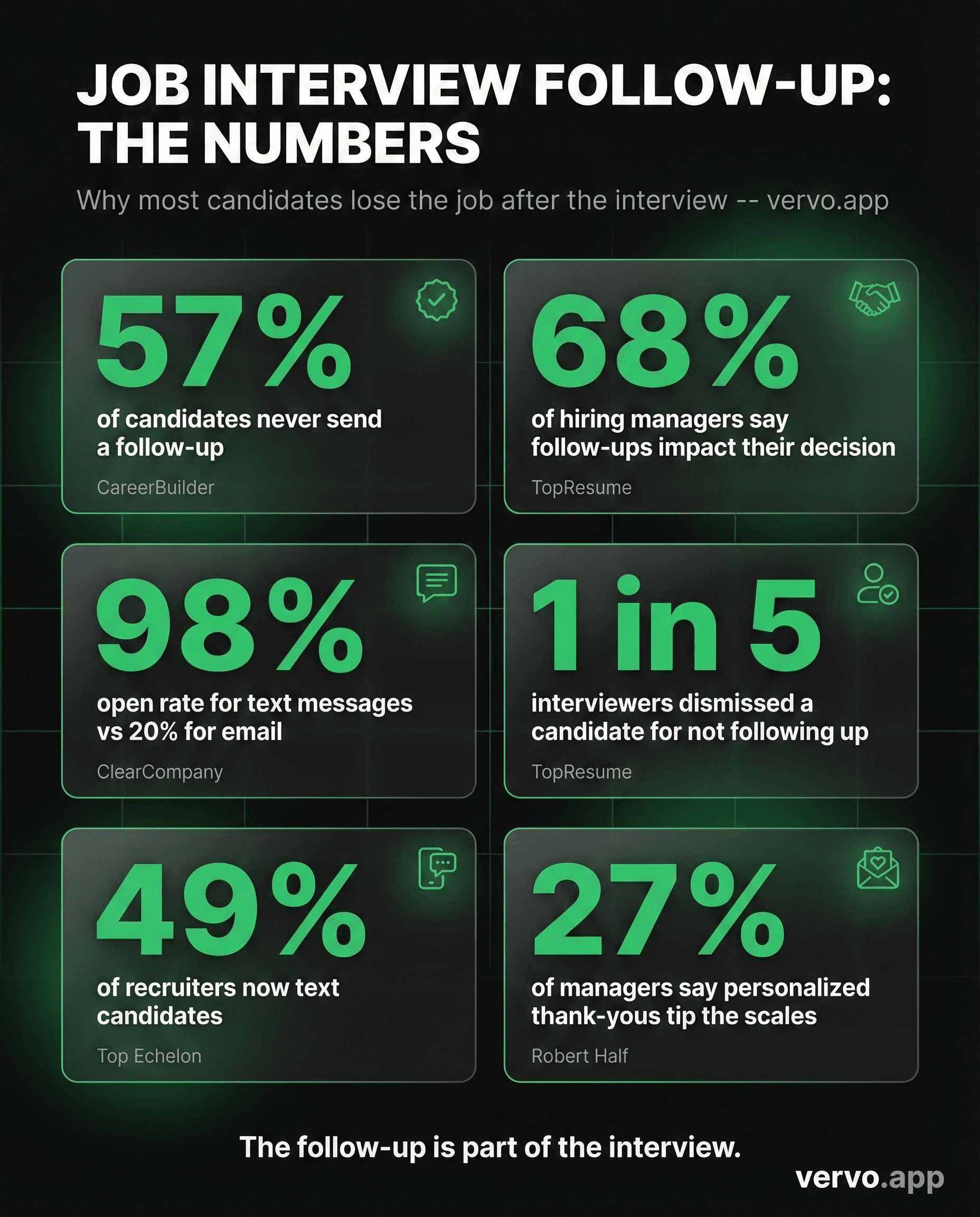
57% of candidates never send a follow-up after an interview. Here are the exact text and email templates for same-day thank yous, check-ins, and post-rejection responses that hiring managers actually notice.

You walked out of the interview feeling good. You answered the questions. You didn't say anything weird. You even made the hiring manager laugh once.
And now you're home, staring at your phone, wondering: do I text them? Email? Wait? Is following up desperate? Is not following up rude?
Here's the answer, backed by data: follow up. Always. Because most people don't.
That number from CareerBuilder means that by simply sending a message, you're already ahead of more than half the candidate pool. And according to a TopResume survey, 68% of hiring managers say receiving a follow-up actually impacts their hiring decision. Nearly 1 in 5 interviewers have dismissed a candidate specifically because they didn't hear from them after the interview.
The follow-up isn't optional. It's part of the interview.
Text vs. email: which one do you send?
This depends on how the recruiter has been communicating with you. If your entire conversation has been over text -- scheduling, confirmations, directions to the office -- then text is appropriate. According to a Top Echelon poll, 49% of recruiters now text both candidates and hiring managers as part of the process.
If the communication has been email-only, stick with email. If it's been a mix, email is the safer default for a formal thank-you, but a short text works well for the informal touchpoints.
The open rate difference is staggering -- 98% for texts versus 20% for emails. But that doesn't mean you should text every recruiter. Match the channel they've used. Mirror their communication style, the same way you'd mirror your boss's texting tone.
The same-day thank you
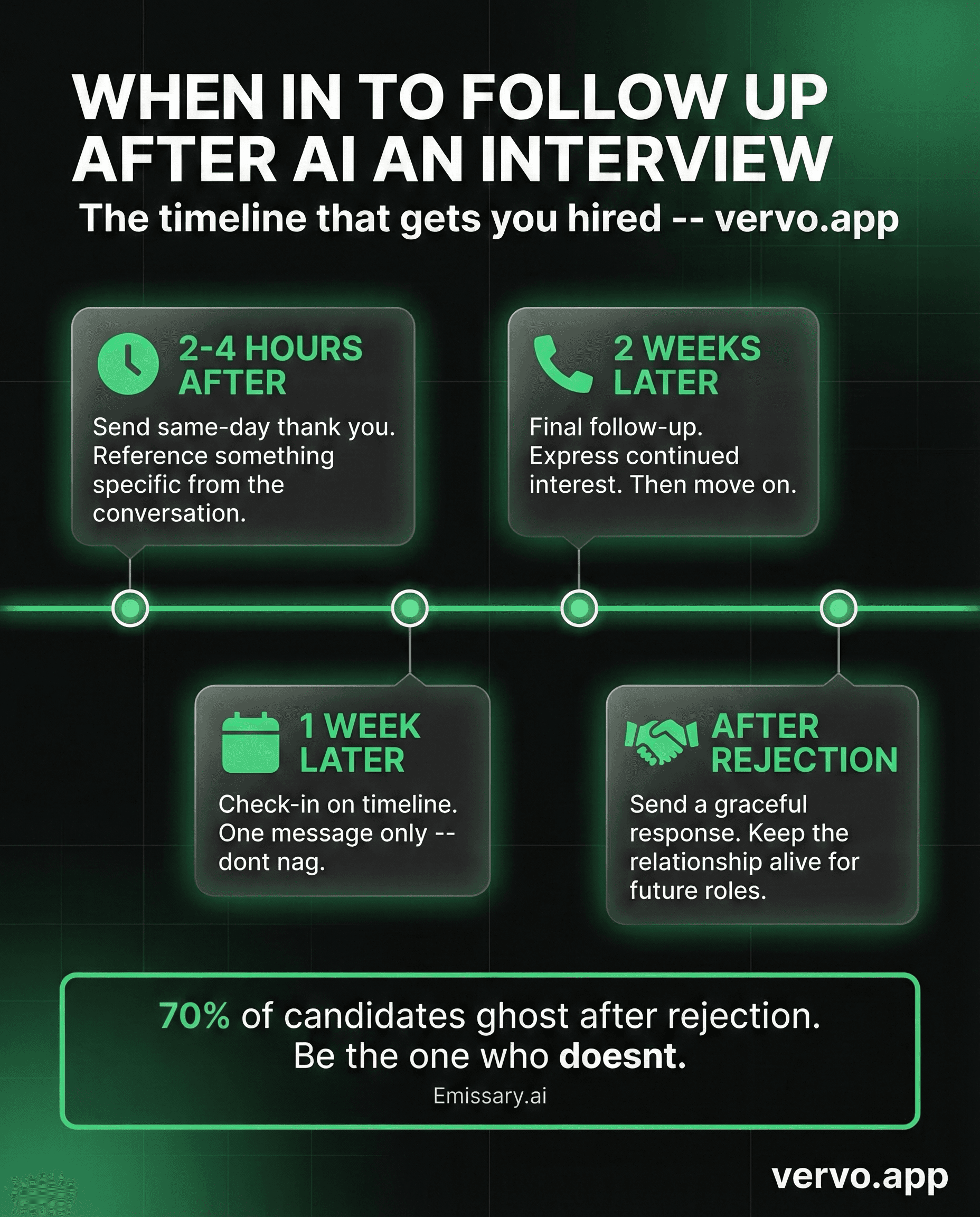
Send this within 2 to 4 hours of the interview. Not 10 minutes after -- that feels rehearsed. Not the next day -- that feels like an afterthought. The sweet spot is a few hours later, when you've had time to reflect.
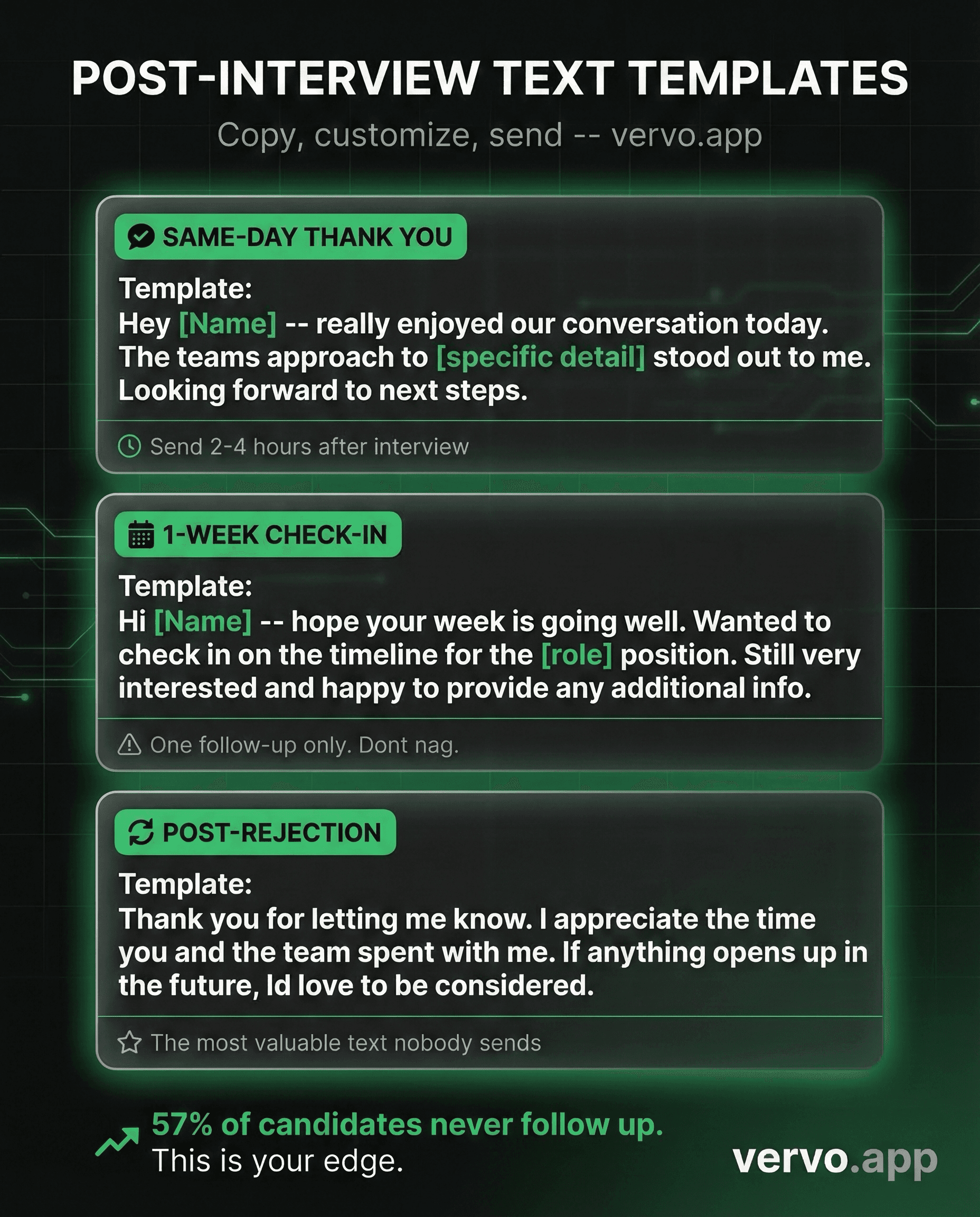
Via email (formal):
Subject: Thanks for the conversation today
"Hi [Name] -- Thank you for taking the time to meet with me today. I really enjoyed learning about the [specific project or team detail they mentioned]. The role aligns well with my experience in [relevant skill], and I'm excited about the opportunity to contribute to [company]. Looking forward to hearing about next steps."
Via text (if texting is established):
Notice what both versions do: they reference something specific from the interview. Not "great meeting you" -- that could be a template you send to everyone. Mentioning a detail proves you were paying attention and makes the message feel personal.
The one-week check-in
If they said you'd hear back in a week and you haven't, it's appropriate to follow up. This is the text most people agonize over because it feels like nagging. It's not. It's professionalism.
Key rules for the check-in:
One follow-up, not three. Send one check-in message. If they don't respond, wait another week before trying again. Two unanswered follow-ups is your signal to move on.
Don't ask "did I get the job?" Keep it open-ended. You're asking about the timeline, not demanding a verdict.
Keep it short. Three sentences maximum. The same principle from follow-up texts in sales applies here -- brevity signals confidence.
The post-rejection response
This is the one almost nobody sends. And it's arguably the most valuable.
A graceful rejection response does three things. First, it's memorable -- most rejected candidates either ghost or send something bitter. According to data from Emissary.ai, texting helps save more than 70% of candidates from ghosting the process entirely. Second, it keeps the relationship alive. Recruiters move between companies, and the person who rejected you today might recruit for your dream role next year. Third, it demonstrates emotional maturity -- a quality that's in shorter supply than technical skills.
This is the professional version of handling rejection without spiraling. Different context, same muscle.
Common mistakes
Over-explaining. Your follow-up is not a second interview. Don't re-argue your qualifications or add points you forgot to mention. Keep it concise.
Being too casual too early. Even if the interview felt relaxed, your first follow-up should be professional. Save the casual tone for after you're hired.
Following up on the wrong channel. If they emailed you the interview details, don't slide into their LinkedIn DMs or text a number you found on their business card. Use the channel they established.
Sending a generic template. Hiring managers can spot a copied-and-pasted thank-you from a mile away. A Robert Half survey found that 27% of hiring managers said candidates who send personalized thank-you messages make a noticeably stronger impression.
When the recruiter texts you first
Gen Z candidates especially are seeing more text-first communication from recruiters. A GoodTime report found that top-performing talent acquisition teams were 58% more likely to use centralized texting platforms. This means you might get interview confirmations, schedule changes, and even offers over text.
When a recruiter texts you first, mirror their style but stay professional. Don't use abbreviations they haven't used. Don't send voice notes. Don't use emojis unless they do. The rules from knowing how to read short replies apply -- pay attention to their tone and match it.
The real advantage
The data is clear. Following up after an interview is one of the highest-leverage, lowest-effort things you can do in a job search. It takes five minutes and puts you ahead of 57% of candidates who won't bother.
If you can't figure out what to text a recruiter, imagine what your crush's DM looks like right now. vervo.app handles both -- screenshot the conversation, get three reply options tailored to the context, pick the one that sounds like you. The follow-up that gets you the job might be one screenshot away.