How to Negotiate Rent Over Text (Scripts That Actually Work)
Only 28% of renters negotiate their lease renewal. Here are the exact text scripts to ask your landlord for lower rent, push back on increases, and leverage maintenance issues.

Most people would rather move than text their landlord about rent. That sounds dramatic, but the numbers back it up. According to a survey by Avail (via CNBC), only 28% of renters have ever negotiated the price on their lease renewal. The rest just accept whatever number shows up in their inbox and quietly panic.
Here's the thing -- landlords expect negotiation more than you think. And texting is actually the ideal format for it. No awkward silence. No stammering. No forgetting the number you rehearsed in the shower. Just a well-crafted message you can draft, edit, and send when you're ready.
Why your landlord wants to keep you
Before you send anything, understand this: your landlord almost certainly does not want you to leave.
Tenant turnover costs landlords between $1,000 and $5,000 per unit, according to data compiled by Innago and Apartments.com. That includes vacancy loss, cleaning, repairs, marketing, screening new applicants, and the administrative headache of starting over. A 2023 Zego report put the average turnover cost at $3,872.
Compare that to the cost of keeping you: roughly $100 to $500 in renewal paperwork. The math is overwhelmingly in your favor. Every landlord knows that a reliable tenant who pays on time is worth more than the difference between their asking rent and a reasonable counter-offer.
This is your leverage. You don't need to beg. You need to make the business case.
When to send the text
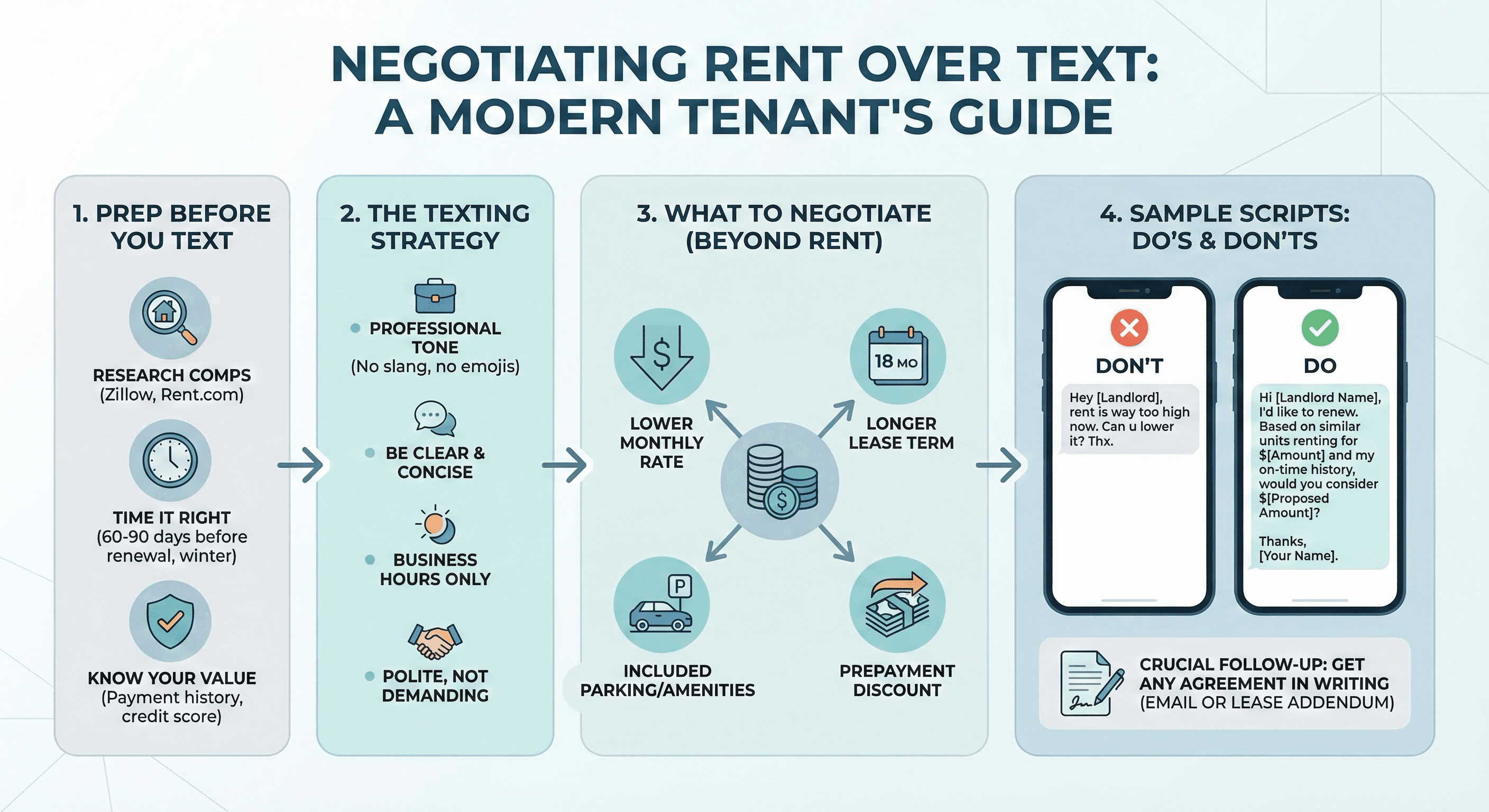
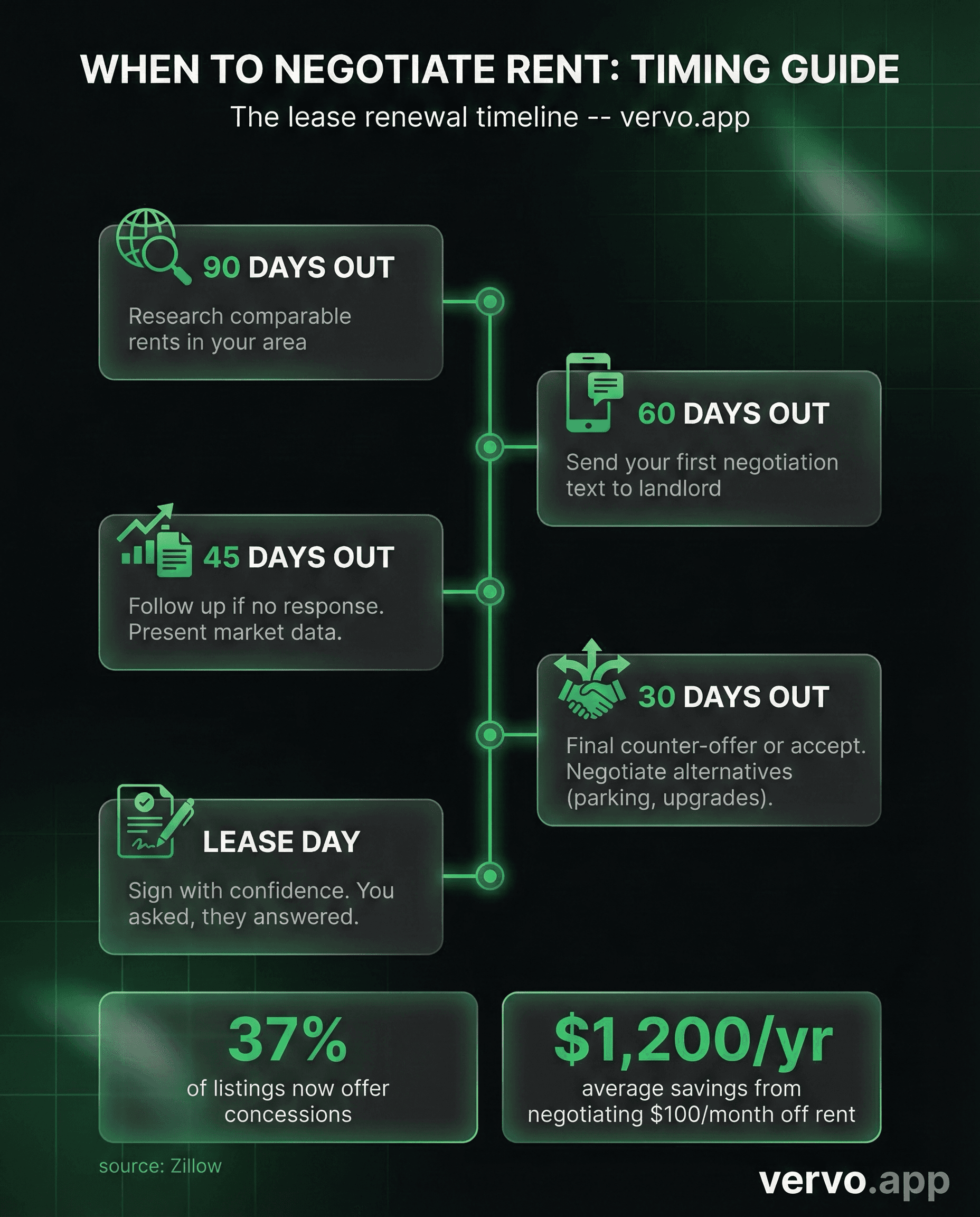
Timing is everything. Start the conversation 60 to 90 days before your lease expires. This gives your landlord time to consider your request without feeling pressured, and it signals that you're planning ahead -- not scrambling.
If you've already received a renewal notice with a rent increase, respond within a week. Waiting too long signals acceptance. Responding too fast might seem reactive. A few days is the sweet spot.
Never negotiate after your lease has already expired or after you've signed a new one. Your leverage disappears the moment ink hits paper.
How to structure the ask
Every rent negotiation text follows the same formula:
1. Acknowledge the relationship. Remind them you've been a good tenant. On-time payments, no complaints, taking care of the property -- these are your credentials.
2. State the ask clearly. Don't hint. Don't apologize. Say what you want.
3. Give them a reason to say yes. Reference market rates, your track record, or your willingness to sign a longer lease.
4. Make it easy to respond. End with a question, not a statement.
The scripts
Pushing back on a rent increase
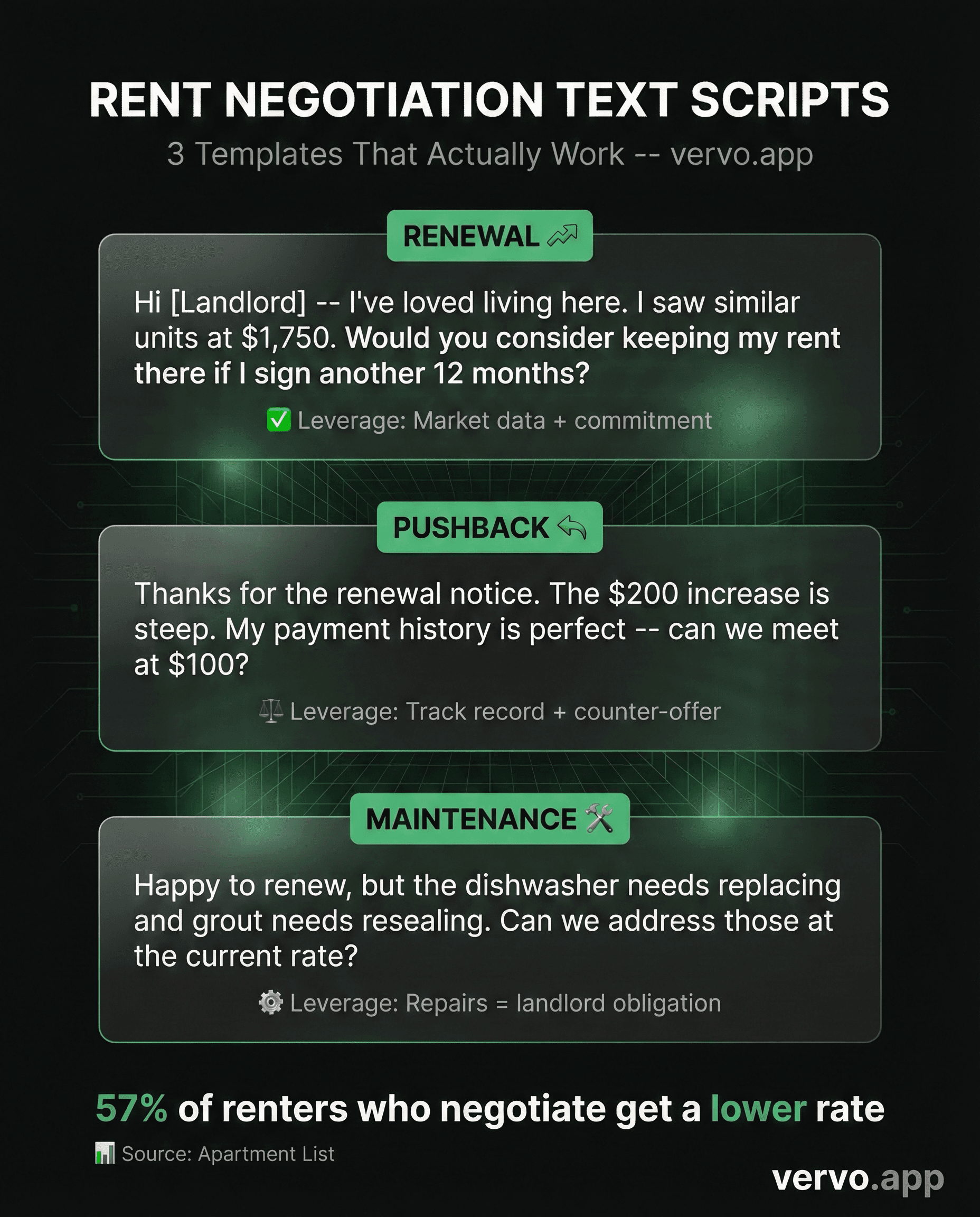
This works because you're not complaining -- you're presenting data. You're giving them a reason (longer lease commitment) and an easy out (they can take time to decide).
Asking for a reduction on a new lease
Notice the counter-offer. This is normal. Landlords rarely accept your first number, but they often meet you somewhere in the middle. According to Apartment List, 57% of renters who negotiate reasonably receive a lower rate.
Using maintenance as leverage
This isn't a threat. It's a trade. You're saying: fix these things or adjust the price. Either outcome benefits you, and it's a completely reasonable position. The key is keeping the tone collaborative, not confrontational.
What not to do
Don't threaten to leave unless you mean it. Empty bluffs backfire. If you say you'll move and they call it, you're stuck.
Don't compare to a completely different type of unit. A studio downtown is not a valid comparison for a two-bedroom in the suburbs. Use genuine comparables.
Don't negotiate over the phone if texting is more comfortable. The same anxiety that makes you overthink texts is the anxiety that makes your voice shake on a phone call with your landlord. Texting gives you control. Use it.
Don't apologize for negotiating. You're not being difficult. You're being a responsible adult managing a major monthly expense. Zillow reports that landlords are offering concessions on 37% of rentals in the current market -- they're already expecting these conversations.
If they say no
Sometimes the answer is no. That's okay. A "no" to a lower rate doesn't mean the conversation is over.
Ask about alternatives: a free month, waived parking fees, an appliance upgrade, or a shorter lease term that lets you reassess in six months. There's almost always room to negotiate on something, even when the headline number won't budge.
And if the answer is a firm no across the board -- you've lost nothing by asking. You've gained information about how your landlord operates, which is valuable when your next renewal comes around.
The bigger picture
Negotiating rent is a communication skill. The same muscle you use to text your boss about a raise or apologize without making things worse is the muscle you're flexing here. It's about being clear and direct without being aggressive.
The same anxiety that stops you from negotiating rent is the same anxiety that stops you from texting back your crush. vervo.app helps with both -- screenshot any conversation, get three reply options in seconds, and send the one that sounds like you. Sometimes breaking the paralysis is all it takes.
A $100/month savings is $1,200 a year. For the cost of one well-written text.