Gen Z Texting Anxiety: Why We Can't Text Back (2026 Data)
Gen Z is the most digitally native generation ever but 47% of us blame anxiety for being single. Here's what happened and what we can actually do about it.
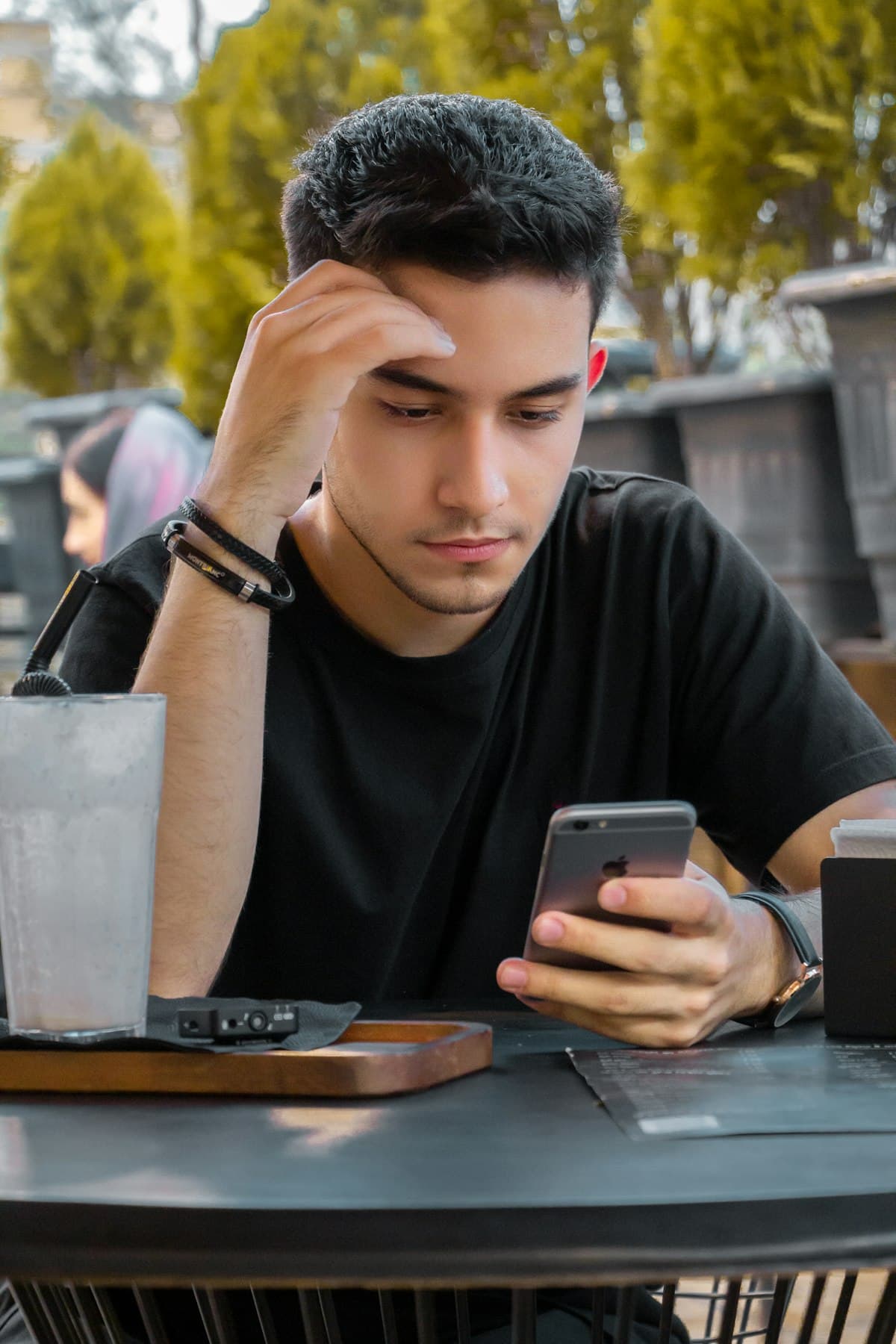
Here's a contradiction that nobody talks about enough.
Gen Z is the most digitally native generation in human history. We grew up with smartphones. We've been texting since middle school. We communicate through screens more than any generation before us.
And 47% of us say anxiety is the reason we're single. We know how to text someone we like in theory -- we just freeze when it's time to actually do it.
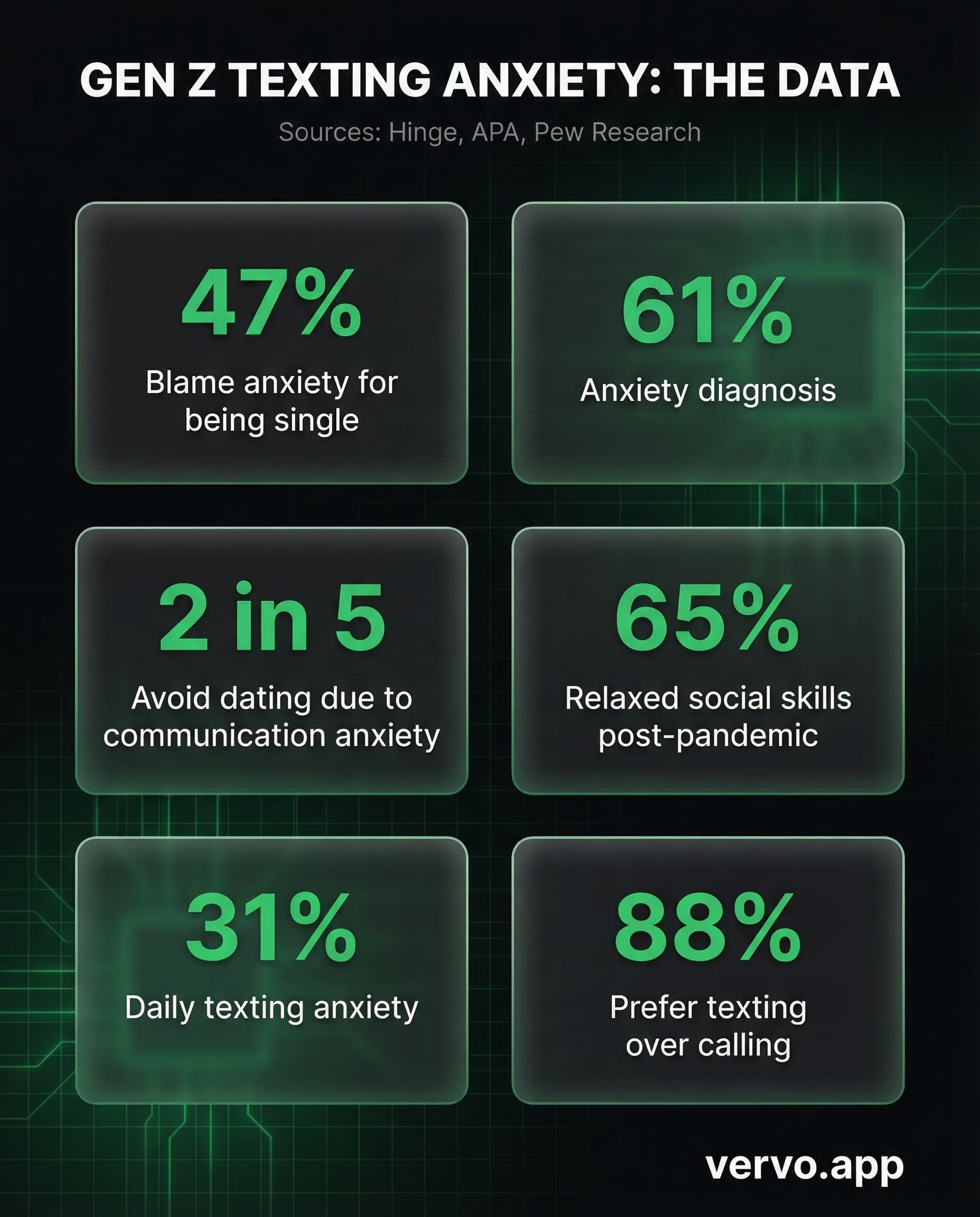
Two in five young Americans don't date at all because of it. Not because they don't want to. Because the anxiety around communication -- especially texting -- is so overwhelming that avoidance feels safer than trying.
How did the generation that grew up online become the generation that's most afraid of a text message?
The Pandemic Broke Something
Let's start with the obvious. Between 2020 and 2022, an entire generation missed the developmental window where social skills traditionally form.
If you were 14 when lockdowns started, you spent your formative high school years communicating almost exclusively through screens. The hallway conversations, the lunch table dynamics, the reading-the-room practice that previous generations got automatically -- you got a fraction of it.
65% of Gen Z feel they had to "relearn" social skills after pandemic restrictions. And texting didn't fill the gap the way people assumed it would. Because texting isn't a replacement for social development -- it's a different skill entirely. And without the in-person foundation, the text-based communication became the primary skill. Which means the stakes feel impossibly high.
When texting is your main form of connection, every text feels like it matters. Every response time feels like a signal. Every word choice feels consequential. Because it is -- when you don't have in-person interaction to balance it out.
The Anxiety Isn't Weakness
61% of Gen Z have an anxiety diagnosis. If you add ADHD into the mix, replying becomes even harder. This isn't a generation of people who need to "toughen up." This is a generation that came of age during a pandemic, an economic crisis, a climate crisis, and a social media environment that was specifically engineered to exploit insecurity.
The texting anxiety is real. The overthinking is real. The paralysis of staring at a message for twenty minutes, writing and deleting five versions, and then putting your phone face-down without responding -- that's real.
And it's not because you're bad at texting. It's because your nervous system learned during a critical developmental period that social interactions are high-stakes and that mistakes have permanent digital consequences. A screenshot lasts forever. A wrong text lives in someone's phone indefinitely. The margin for error feels razor-thin.
The Paradox of Digital Natives
Here's what's counterintuitive: being a digital native doesn't make texting easier. It makes it harder.
Previous generations learned to text as adults with already-established social skills. They brought in-person confidence to the screen. Their texting was an extension of who they already were.
Gen Z built identity and social skills on the screen. Which means the screen isn't supplementary -- it's foundational. And when the foundation is digital, every digital interaction carries the weight of identity itself.
That's why "just text them back" feels like unhelpful advice. It's not just a text. It's a performance of self in the arena where self was constructed. Of course it's anxiety-inducing.
What This Actually Looks Like
The overthinking cycle: receive a message, analyze every possible meaning, draft a response, delete it, redraft it, worry about timing, send it, immediately regret it, wait anxiously for a reply, interpret the reply through a lens of anxiety, repeat.
31% of people experience daily anxiety from texting. Not occasionally. Daily.
The phantom vibrations -- checking your phone when it didn't actually buzz. The read-receipt spiral -- seeing "Read" with no reply and running seventeen worst-case scenarios. The shame spiral of unread texts that builds until your phone feels radioactive. The screenshot fear -- crafting every message as though it might be shared with someone else.
These aren't character flaws. They're stress responses in a generation that was taught -- by experience, by social media, by a pandemic -- that communication is both essential and dangerous.
Breaking the Cycle
I'm not going to tell you to "just stop overthinking" because that advice has never worked for anyone in the history of overthinking. But here are some things that actually help.
Set a response timer. When you see a text that triggers anxiety, give yourself a window. Five minutes. Not to craft the perfect response, but to send a good-enough one. Perfect is the enemy of sent. And a slightly imperfect text sent in five minutes is better than a perfect text sent in five hours.
Stop reading tone into text. This is the hardest one. But "ok" doesn't mean they're mad. "Haha" doesn't mean they're mocking you. "Sure" doesn't mean they're annoyed. You are projecting tone onto a medium that doesn't carry tone. The story you're telling yourself about their mood is almost certainly more dramatic than reality.
Text the way you talk. If you wouldn't spend twenty minutes choosing words in a face-to-face conversation, don't do it in a text. Lower the bar. Typos are fine. Fragments are fine. "Lol idk" is a perfectly acceptable response to most things.
Separate texting from your worth. A slow reply doesn't mean you're unlovable. A dry conversation doesn't mean you're boring. A left-on-read doesn't mean you're forgettable. Texting is one tiny communication channel. It is not a referendum on your value as a human being.
Normalize the anxiety with the people you text. Sometimes a voice note is easier than a text for this -- hearing your tone removes the ambiguity. "Hey, just so you know, I'm terrible at responding quickly but it's not personal -- I overthink everything." That text, sent once, removes so much pressure from every future interaction. Vulnerability about communication style is disarming and usually met with relief.
You're Not Broken
If you read this and thought "that's me," I want you to know: you're not broken. You're not weak. You're not the only one who stares at a text for ten minutes before responding.
An entire generation shares this experience. The tools and the environment and the developmental context created a specific kind of anxiety that previous generations didn't face. Recognizing that isn't making excuses. It's understanding the problem clearly enough to actually address it.
When You're Stuck
For the moments when the anxiety wins -- when you're staring at a message and every reply sounds wrong, when you've deleted four drafts and your brain is spiraling -- try screenshotting the conversation and letting Vervo suggest some options. Sometimes seeing a clear, well-worded response takes the pressure off your brain to generate one from scratch.
You don't have to be perfect. You just have to press send.