5 Sales Texts That Actually Get Replies
Real sales text examples for ghosted prospects, no-shows, cold leads, and warm intros gone silent. Three reply options for every scenario.

You sent the perfect follow-up. The prospect seemed interested. And then -- nothing.
No reply. No "let me think about it." Just the void of an unread message and the creeping suspicion that you're about to lose this deal to silence.
Sales texting is a different game than cold email. There's no subject line to A/B test. No drip sequence to hide behind. It's just you, their phone, and the pressure of saying the right thing in 160 characters or less.
Here are five real sales text conversations -- the exact moments where reps freeze up -- with three ways to reply that actually work.
How Do You Follow Up After a Prospect Goes Dark?
This is the number one pain point in sales right now. The demo went great. They said all the right things. You sent the proposal. And then they vanished.
The instinct is to send "just checking in" or "circling back." Both of those have a 4% response rate and you know it. The problem isn't your timing -- it's that you're making the conversation about the sale instead of about them.
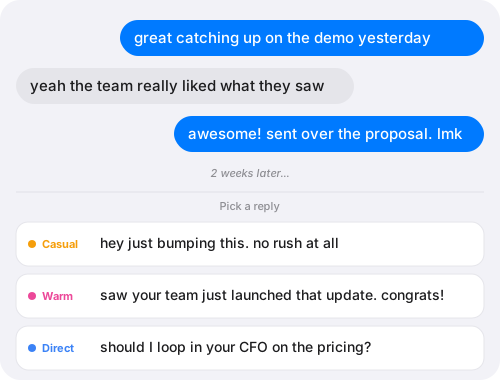
The casual reply takes the pressure off completely. "No rush" signals that you're not desperate. The warm reply pivots to something about them -- their company news, their launch, their win -- which re-engages without asking for anything. The direct reply escalates strategically by involving a new stakeholder.
If the initial outreach was the hard part, check out cold text outreach without sounding spammy. But the follow-up is its own game.
What Do You Text After a No-Show?
They booked the call. You showed up. They didn't. The read receipt says they saw your "no worries" message. And now it's the next morning.
This is where most reps either give up or send something passive-aggressive. Both are wrong. A no-show isn't a rejection -- it's someone who got busy. Your job is to make rescheduling feel effortless, not guilt-inducing.
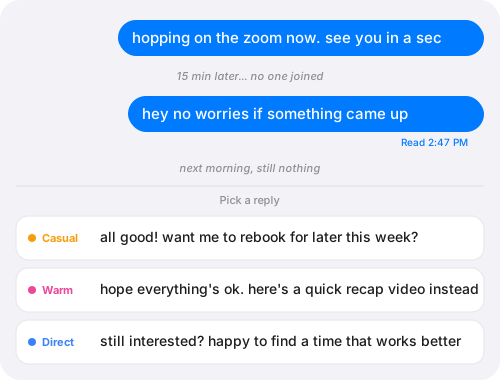
The casual reply makes rescheduling a one-word answer. The warm reply adds unexpected value -- a recap video they can watch on their own time. The direct reply cuts straight to it without any filler.
The key is speed. Text within 18 hours. After that, the awkwardness compounds and they start avoiding you. For more on timing, sales follow-up texts that actually close breaks down the science.
How Do You Re-Engage a Warm Intro That Went Cold?
A mutual connection made the introduction. The prospect said "sounds good, let's chat." You were excited. And then... ten days of silence.
This one stings because there's a third person involved. You can't just be aggressive -- you'll make your introducer look bad. But you also can't wait forever, because warm intros have a 72-hour window before they go cold.
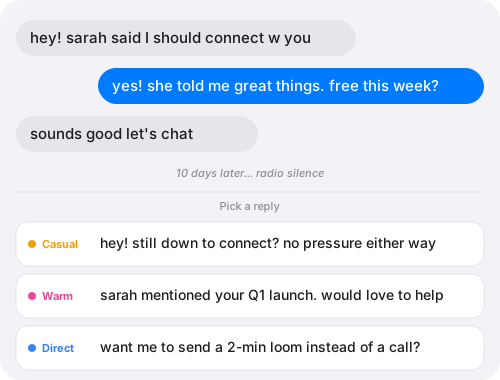
The casual reply is genuinely pressure-free. "No pressure either way" gives them an out, which paradoxically makes them more likely to respond. The warm reply ties back to something specific about their business -- it shows you did your homework. The direct reply offers a lower-commitment alternative to a full call.
The Loom video play is huge in 2026. A 2-minute async video converts at 3x the rate of a text-only follow-up because it feels personal without demanding their calendar.
What's the Best First Text to a New Inbound Lead?
Someone just filled out your pricing form. Your CRM pinged you. The clock is ticking. Studies show that responding within 5 minutes makes you 21x more likely to qualify the lead than waiting 30 minutes.
But "fast" doesn't mean "sloppy." The worst thing you can do is blast a template that screams automation. They just raised their hand. Meet them where they are.
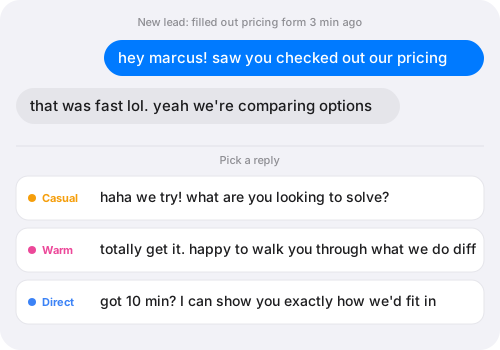
The casual reply matches their energy -- they made a joke about your speed, so you lean into it with a question that moves the conversation forward. The warm reply acknowledges they're comparing options (of course they are) and offers to differentiate. The direct reply goes for the close immediately.
Notice that all three replies are under 15 words. The first text to an inbound lead should never be a paragraph.
How Do You Text After Leaving a Voicemail?
You called. It went to voicemail. You left a message. And now you're staring at your phone wondering whether to text or wait.
Always text. 69% of buyers are open to cold calls, but voicemail-to-text is the bridge that actually gets the conversation started. The voicemail creates awareness. The text creates action.
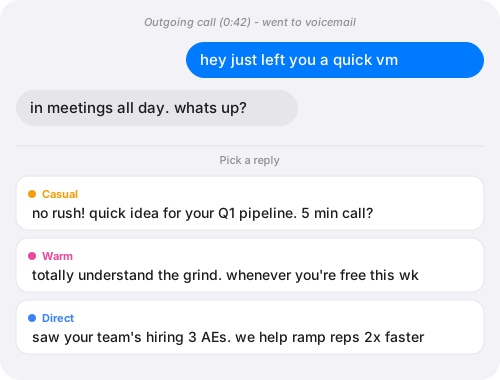
The casual reply is light and gives them a reason to care. The warm reply acknowledges their reality -- they're slammed, you get it. The direct reply is the power move: lead with a specific, relevant insight about their company that proves you're not just dialing down a list.
Why Sales Texting Is Different From Every Other Channel
Email gives you space to build a narrative. LinkedIn gives you a profile to reference. But texting? Texting is intimate. It's where their mom texts them. It's where their friends send memes. You're competing with real life for attention. There's a reason texting is overtaking calling in sales -- it meets prospects where they already live.
That intimacy is your advantage -- if you respect it. Keep texts under 20 words when possible. Never send more than two unanswered texts in a row. And always, always give them an easy out. Paradoxically, the easier you make it to say no, the more likely they are to say yes.
If you're freezing on what to say next, you're not alone. Sales reps spend an average of 7 minutes crafting a single follow-up text. That's 7 minutes of overthinking that could be spent on the next prospect.
Vervo gives you three reply options in seconds. Screenshot the conversation, pick your tone, send. No more staring at the cursor.
Your pipeline doesn't close itself. But at least your texts can.