Long Distance Texting: How to Stay Connected Without Being Clingy
Long distance relationships live and die by texting. Here's how to keep the connection alive without suffocating each other through a screen.
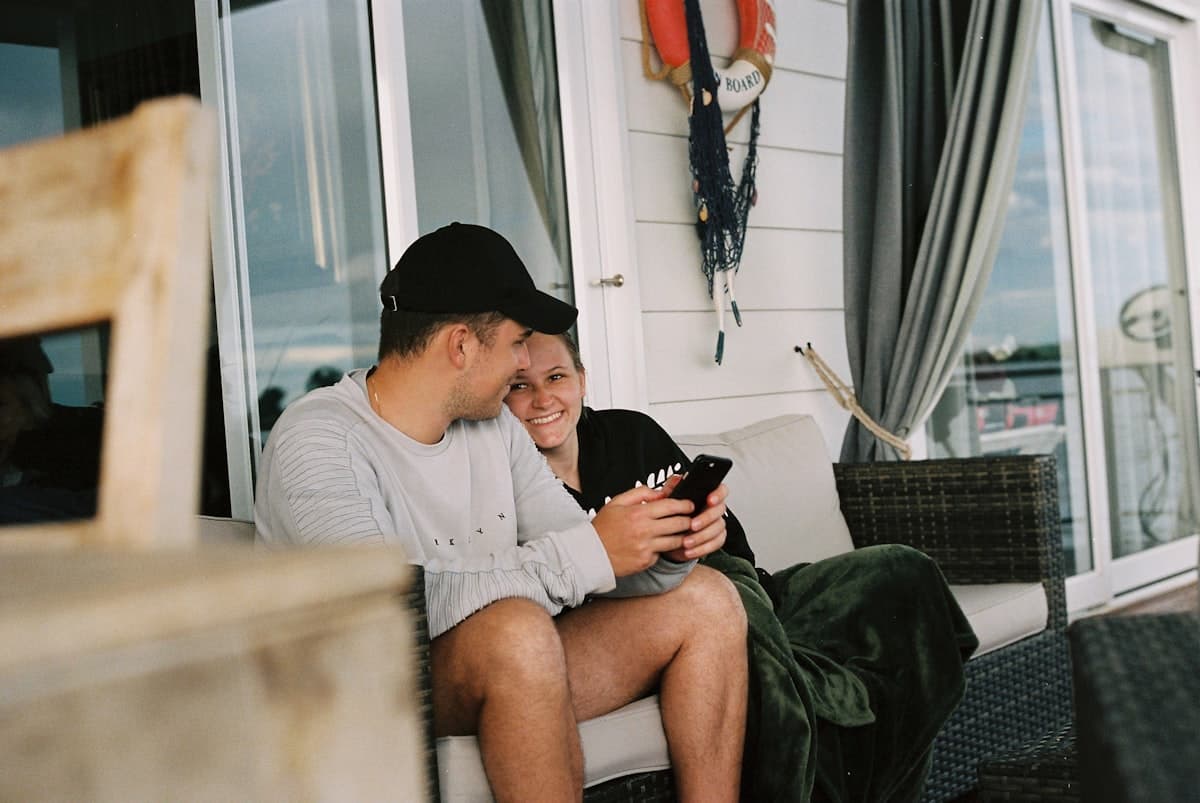
Long distance is texting on hard mode. Everything that's tricky about normal texting -- tone, timing, misunderstandings -- gets amplified when texting is the only thing keeping you connected.
You can't just swing by after work. You can't read their body language over dinner. You can't fix a weird text exchange with a hug. All you have is a screen, a keyboard, and the constant low-level anxiety of wondering if they're pulling away or just busy.
I've been there. And the hardest part isn't the distance. It's the silence between messages -- and what your brain does with it.
The Texting Paradox of Long Distance
Here's the trap. When you're long distance, texting becomes the relationship. It's your dates, your check-ins, your arguments, your "I miss you"s, your morning hellos, your goodnight rituals. Everything flows through that one channel.
Which means every text carries too much weight.
In a regular relationship, a short reply is just a short reply. They're probably in the other room. You'll talk about it at dinner. But in long distance, a short reply feels like distance -- which is the one thing you already have too much of.
And so you start reading into everything. How long they took to respond. How many words they used. Whether they said "love you" or just "love u." Whether that period at the end means they're mad. You're not paranoid -- you're just working with less information than the relationship requires, and your brain is filling in the gaps with worst-case scenarios.
How Much Texting Is Too Much?
This is the question every long distance couple fights about, even if they don't call it a fight.
One person wants constant communication. "Good morning" texts, midday check-ins, photos of lunch, play-by-plays of their afternoon, video calls every night. They express love through presence -- even digital presence.
The other person wants space. They love their partner, but they also have a job, friends, hobbies, and a life that doesn't stop because they're in a relationship. They don't want to narrate their entire day into a phone. That doesn't mean they don't care. It means they need room to breathe.
Neither person is wrong. But if you don't talk about it -- explicitly, clearly, without resentment -- it will eat the relationship alive.
The conversation sounds like this: "I feel most connected when we text throughout the day. What makes you feel connected?" Not "why don't you ever text me first" or "you're being clingy." Frame it as needs, not accusations.
Some couples land on a morning text and an evening call. Others text throughout the day. Others send voice notes during commutes. There's no universal formula. The only wrong answer is assuming your partner's texting frequency means the same thing to them as it does to you.
The Timezone Problem
If your partner is three, six, twelve hours ahead -- texting gets logistically brutal.
You wake up to their messages from last night. You reply to things they said hours ago. By the time they wake up, your morning energy has faded and you're in work mode. You're always slightly out of sync, like two radios tuned to slightly different frequencies.
Some things that help:
Async voice notes. Instead of texting back and forth across timezones, send a voice note when you have a quiet moment. They listen when they wake up. It feels more personal than text and doesn't require real-time coordination. The voice notes vs. texts question is easy in long distance -- voice notes win for emotional connection.
One overlapping window. Find the hour or two where you're both awake and present. Protect that window. That's your real-time connection. Everything else can be async.
Timestamps as context, not evidence. If they didn't reply for six hours, check the time difference before you check your anxiety. 3am their time is 3am their time. They were sleeping, not ignoring you.
When Texting Starts to Feel Like a Chore
It happens. Three months in, six months in, sometimes two weeks in. The novelty wears off. You've described your day so many times that it starts to feel repetitive. "Went to work. Had lunch. Work was fine. Missing you." Same script, different day.
This is normal. It doesn't mean the relationship is dying. It means you've hit the wall where quantity of communication needs to shift to quality.
Instead of narrating your day, share something specific. A weird interaction with a coworker. A song that made you think of them. A question you've been curious about. "Would you rather live in a house with no doors or a house with no windows?" is more interesting than "how was your day?" for the 90th time.
Here's the difference:
Versus:
One feels like maintenance. The other feels like connection.
If you're struggling with this, it's the same challenge as keeping any text conversation alive -- except the stakes are higher and you can't just see each other tomorrow to reset.
Share your world, not your schedule. Photos of something funny you saw. A screenshot of a meme that's so specific to your inside jokes that nobody else would get it. A song recommendation with "this is how I'm feeling today." These small gifts of context do more for connection than a play-by-play of your Tuesday.
The "Are You Losing Interest?" Spiral
Long distance amplifies every anxiety. Their texts get shorter. They stop sending good morning messages. They seem distracted during your nightly calls. And the spiral starts.
Are they losing interest? Is there someone else? Am I boring them? Should I text more? Less? Am I being needy? Am I not being needy enough?
Before you spiral into overthinking every text, check the basics:
Are they going through something? Work stress, family stuff, health issues -- all of these reduce someone's texting energy without having anything to do with you. Ask. "You seem quieter lately -- everything okay?" is caring, not clingy.
Has the pattern actually changed, or are you just noticing it more? Sometimes we go through a week where we're hyperaware of our partner's behavior. Maybe they've been texting the same amount they always do -- but today you noticed. Check the pattern over weeks, not hours.
Have you communicated your concern? Not as an accusation. Not as a test. "I've been feeling a little disconnected this week. Can we talk about it?" That's vulnerable. That's also the only thing that actually helps.
The spiral never gives you answers. Conversation does.
Fighting Over Text in Long Distance
Every long distance couple fights over text at some point. And it's terrible. Because you can't walk to the other room to cool off. You can't hear their tone soften. You can't see the moment where anger turns into sadness in their eyes.
All you see is words. And words without tone are gasoline.
My rule for long distance fights: three back-and-forth messages max. If the argument isn't resolved in three exchanges, switch to a call. Text arguments escalate because misread tone compounds with every reply. One misunderstood sentence becomes two, becomes four, becomes "you know what, forget it" and then silence.
And silence in long distance is deafening.
If you can't call right away, say so: "This feels like it's getting bigger than it needs to over text. Can we talk tonight?" That's not avoiding the issue. That's choosing a better medium for resolving it.
If you're on the receiving end of a hard message -- one that stings -- read it twice before responding. Read it charitably the first time. Read it literally the second time. Then respond to the literal version, not the one your hurt feelings interpreted.
What Long Distance Texting Actually Tests
The thing about long distance is that it tests something most relationships don't get tested on until later: can you communicate without convenience?
When you live in the same city, communication is supplemented by proximity. Physical presence fills the gaps that texting leaves. But in long distance, texting is the relationship. And that means you have to be better at it than most couples ever need to be.
You have to be clearer, because they can't read your face. You have to be more intentional, because a quick text in the parking lot is the closest thing to a hello kiss you're going to get today. You have to be more patient, because the reply might come in four hours and that has to be okay.
And honestly? Couples who survive long distance tend to be better communicators for life. Because they had to learn how to say everything through a screen -- and that forced a kind of emotional clarity that most people never develop.
The Practical Stuff
A few things that work:
Shared playlists. Add a song when you're thinking of them. They add one when they're thinking of you. No words needed. Just music that says "I'm here."
Screenshot sharing. Something funny on your feed? Screenshot, send. It takes two seconds and says "I saw this and immediately thought of you." That's connection without pressure.
Planned spontaneity. Pick a random time during the week to send an unexpected voice note or photo. Not on a schedule. Just when the mood strikes. Predictability is the enemy of excitement.
End-of-day debriefs. Not "how was your day" in a text. An actual call or long voice note where you talk about the one interesting thing that happened. Quality over quantity.
And when you're stuck -- when you're staring at their message and you know the wrong reply could start a fight or the right reply could save your night -- screenshot the conversation and let Vervo show you a few options. Not because you need an AI to text for you. But because sometimes, when the stakes feel impossibly high, seeing three different ways to say what you're feeling is exactly the nudge you need.
Long distance is hard. The texting part is harder. But it doesn't have to be the thing that breaks you. It can be the thing that teaches you how to love someone with nothing but your words.
That's not a limitation. That's a skill.