The Typing Indicator: A Comic About Overthinking Those Three Dots
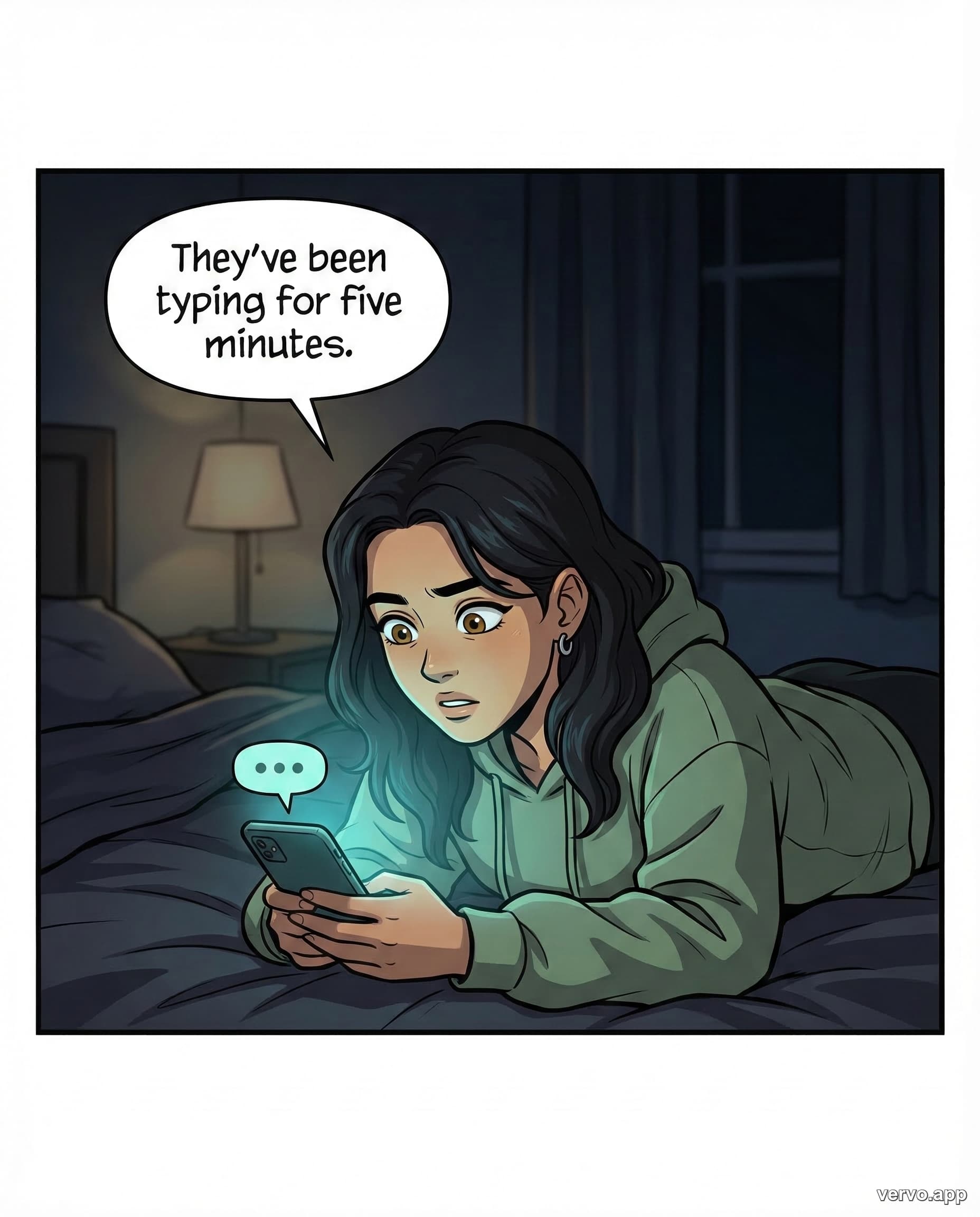
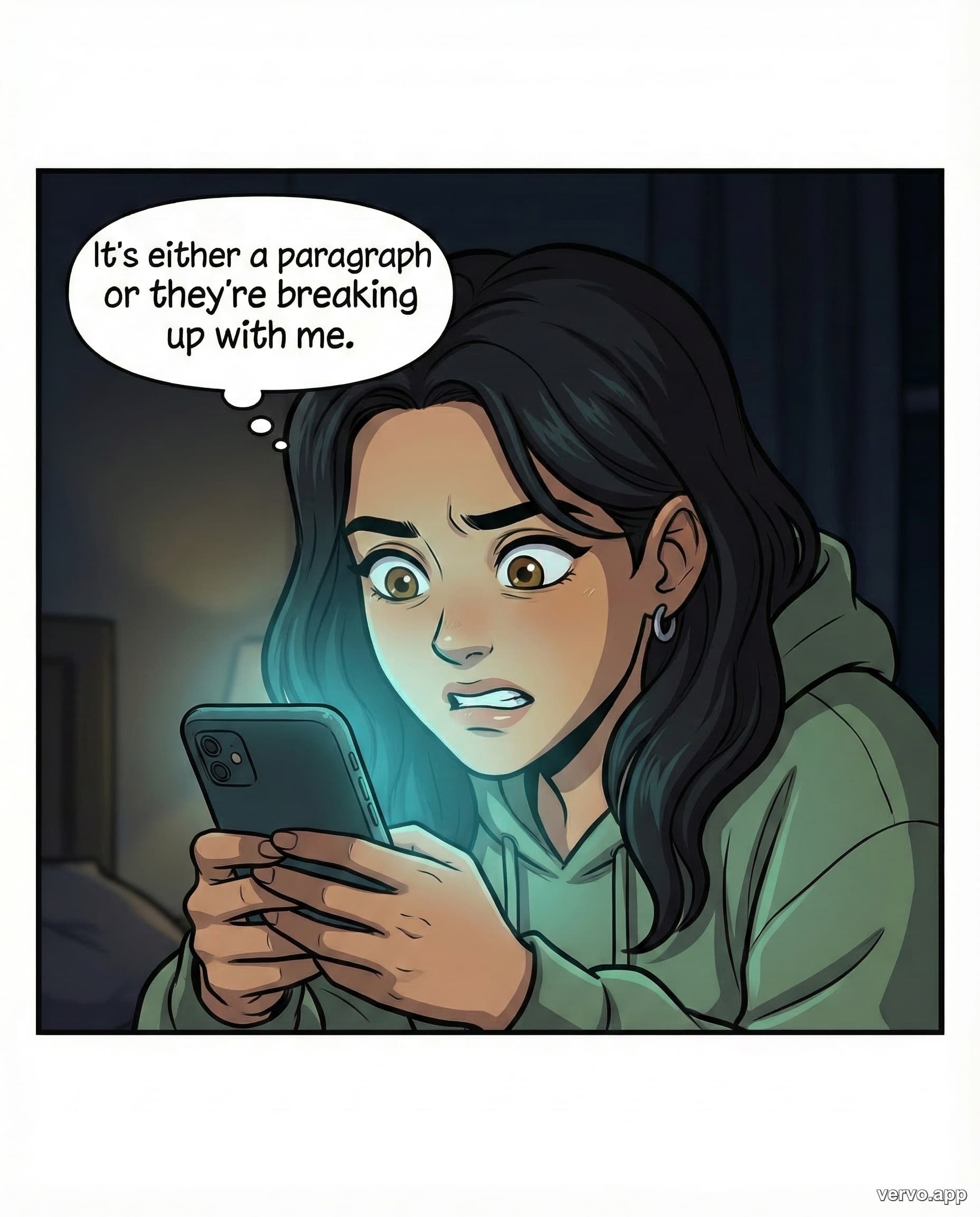
Emma watches the typing indicator for five minutes and spirals. A 4-panel comic about why those three dots don't mean what you think.
This is Part 1 of "Read Receipts," a comic series about the texts that keep us up at night.
The Typing Indicator Lie
You've been there. Lying in bed at midnight, staring at those three pulsing dots like they hold the answer to every question you've ever had about this person. Five minutes of typing. This must be big. They're writing something important, something long, something that will change everything.
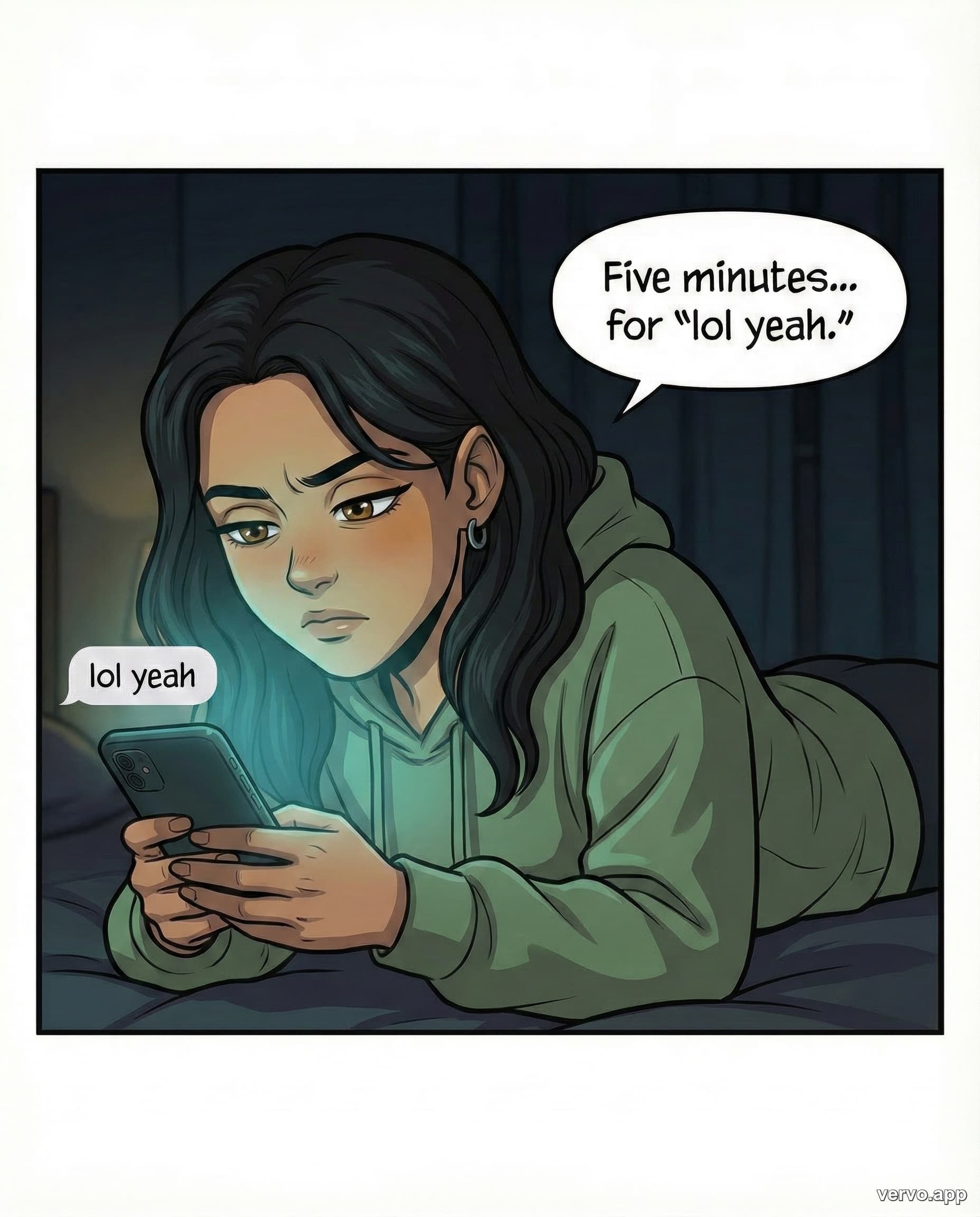
Then the message arrives: "lol yeah."
The typing indicator is one of the most anxiety-inducing features ever designed for a phone. It gives you just enough information to spiral -- they're there, they're thinking about your message, something is coming -- but not enough to actually relax.
What Those Dots Actually Mean
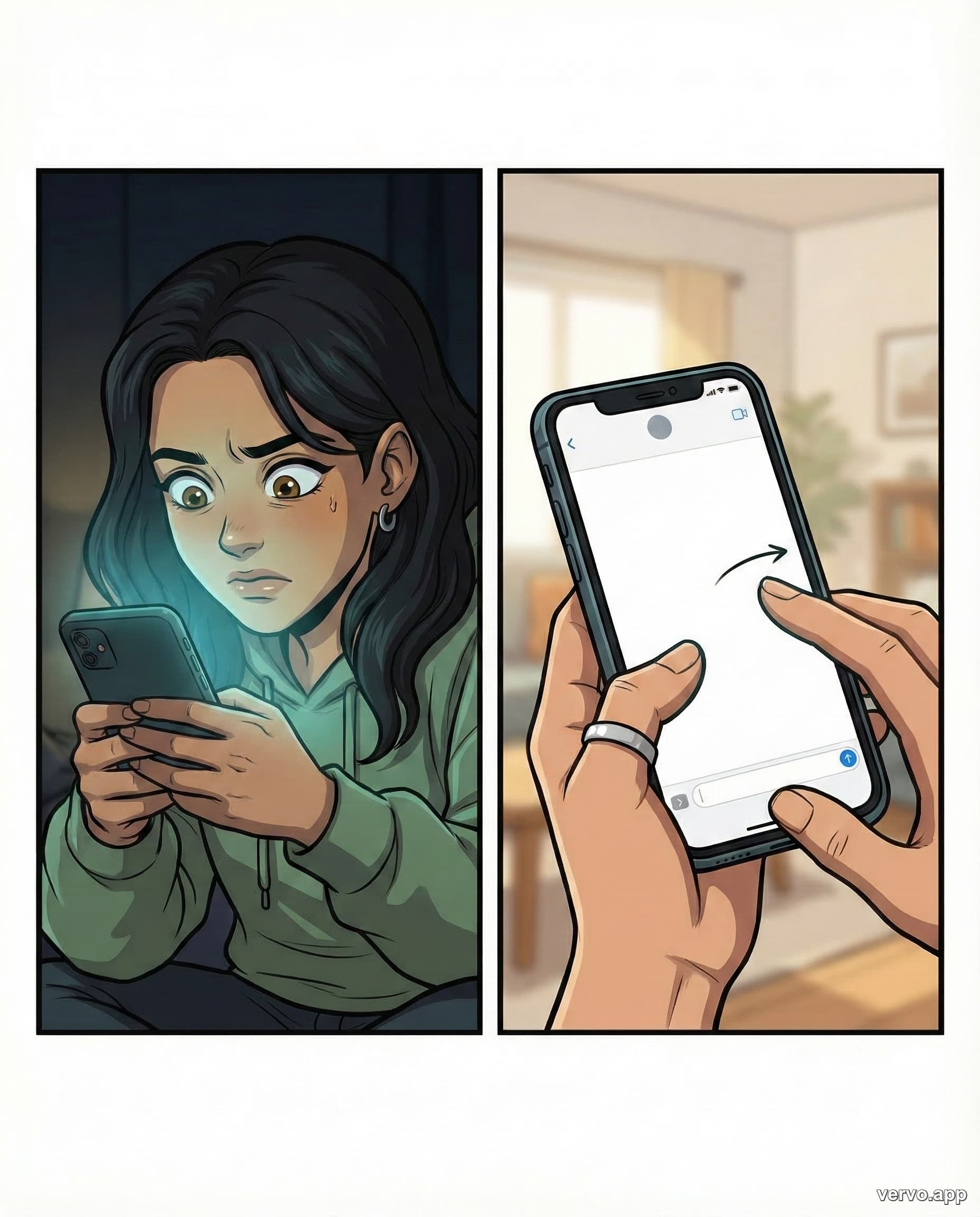
Here's what most people don't realize. The typing indicator shows up when someone opens your conversation. That's it. They might type three words, delete them, get distracted by a notification, open Instagram, come back four minutes later, and type "lol yeah." The dots were active the entire time, but they weren't actually writing.
Some people are slow typers. Some people type and delete repeatedly because they're overthinking their reply just as much as you're overthinking their dots. Some people accidentally open the chat while scrolling and the dots appear before they even meant to read your message.
The dots are not a promise. They're a notification that someone's thumb landed in your general direction.
Why We Can't Stop Watching
The reason the typing indicator is so effective at creating anxiety is because it activates your brain's prediction engine. You see evidence that a response is coming, so your brain starts generating possible outcomes. And because your brain is wired to prioritize threats, it generates the worst outcomes first.
They're breaking up with me. They're angry. They're writing a careful rejection. They found out about the thing I said. Each second the dots persist, your brain adds another catastrophic scenario to the list.
Meanwhile, the actual person is probably trying to figure out if they should use "haha" or "lol."
The Antidote
Put the phone face-down. Seriously. The dots will still be there in five minutes, and the message will arrive whether you're watching or not. The only thing you control is whether you spend those five minutes in a spiral or doing literally anything else.
If you find yourself staring at typing indicators regularly, that's a sign you might be overthinking your texts in general. The dots aren't the problem. The interpretation engine running in your head is the problem.
And the message? It's almost always shorter, simpler, and less dramatic than anything you imagined.
Need help figuring out what to actually say back? Vervo gives you three reply options in seconds -- so you can stop staring at dots and start sending.